What is TrueNAS?
In the realm of data storage, TrueNAS stands out as one of the most widely recognized open-source NAS (Network Attached Storage) operating systems available today. It not only caters to individual users but is also a preferred choice among businesses, educational institutions, and data centers due to its stability, high performance, and exceptional data protection capabilities.
If you’re contemplating the creation of a NAS system for personal use, your business, or a homelab, this guide aims to clarify what TrueNAS is, the various versions available, and which is the most suitable choice for 2026.
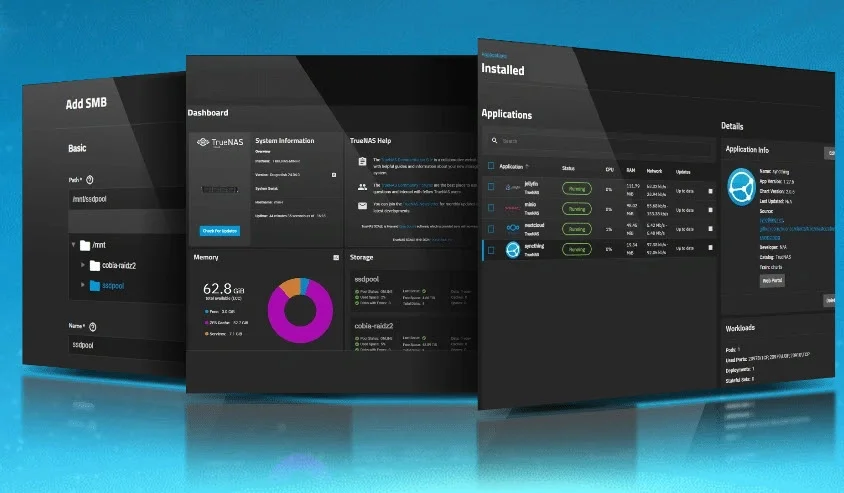
Overview of TrueNAS
TrueNAS is a free NAS operating system developed by iXsystems, capable of transforming a standard computer or server into a professional-grade network storage system. One of the most significant features of TrueNAS is its utilization of OpenZFS, a renowned file system known for its robust data protection, self-healing capabilities, support for snapshots, replication, and RAID-Z. This technology ensures that your data is well protected against hard drive failures, accidental deletions, and even ransomware attacks.
Beyond storage, TrueNAS offers a range of functions, including:
- Data sharing via SMB, NFS, AFP, FTP, iSCSI, etc.
- Running Docker containers and applications.
- Hosting virtual machines (VMs).
- Automated data backups.
- Synchronization with other NAS systems.
- User management and access control.
- System monitoring through a web interface.
Essentially, TrueNAS serves as a “mini data center” for both households and businesses.
Key Features of TrueNAS
TrueNAS is highly regarded for several compelling features:
- Completely free (Community Edition).
- Open-source software.
- Data protection through OpenZFS.
- Integrated snapshot and replication capabilities.
- Support for Docker and virtual machines.
- User-friendly web interface.
- Management of multiple hard drives with RAID-Z support.
- Compatibility with SMB, NFS, FTP, S3 Object Storage, iSCSI, etc.
- Can be installed on old computers, Mini PCs, or dedicated servers.
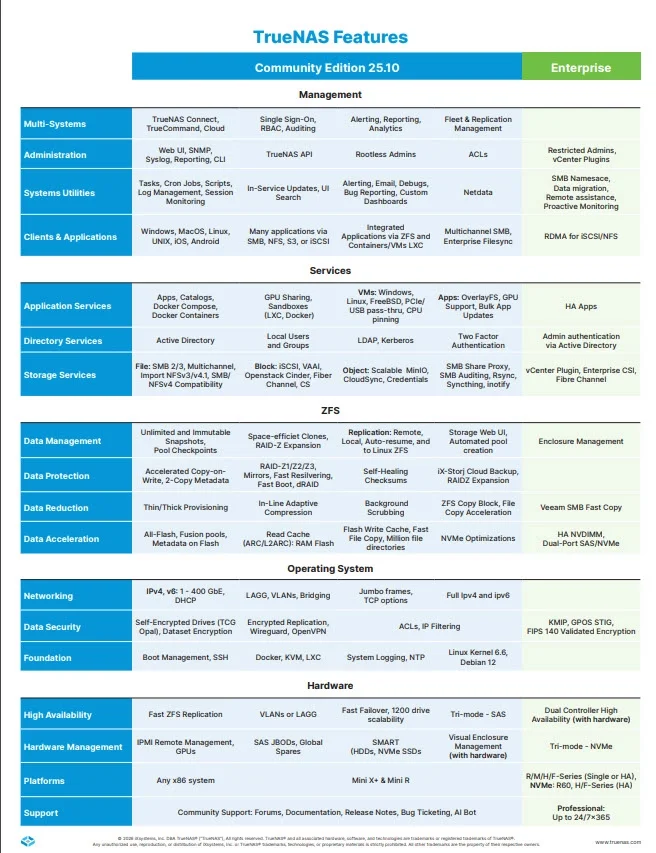
Versions of TrueNAS
Many newcomers find themselves confused when encountering various names such as CORE, SCALE, Community Edition, and Enterprise. Here’s an overview of each:
1. TrueNAS CORE (Legacy)
TrueNAS CORE is the oldest version, built on FreeBSD. It has long been the top choice for those requiring a stable NAS system.
- Advantages: Highly stable, robust storage performance, powerful OpenZFS support, suitable for traditional NAS setups.
- Disadvantages: Based on FreeBSD with limited software options compared to Linux, no new feature development, only security patches and maintenance updates.
If you plan to install a new system in 2026, TrueNAS CORE is not recommended.
2. TrueNAS SCALE (now TrueNAS Community Edition)
Initially built on Debian Linux, TrueNAS SCALE aimed to provide better scalability, Docker support, Kubernetes (in early versions), and virtual machine capabilities. Since version 25.04, iXsystems has merged the development paths and renamed TrueNAS SCALE to TrueNAS Community Edition (CE), which is currently the only actively developed free version for the community.
- Advantages: Based on Linux, excellent support for Docker/App, virtual machine capabilities, broad hardware support, modern interface, continuous feature updates.
This is the version most newcomers should consider.
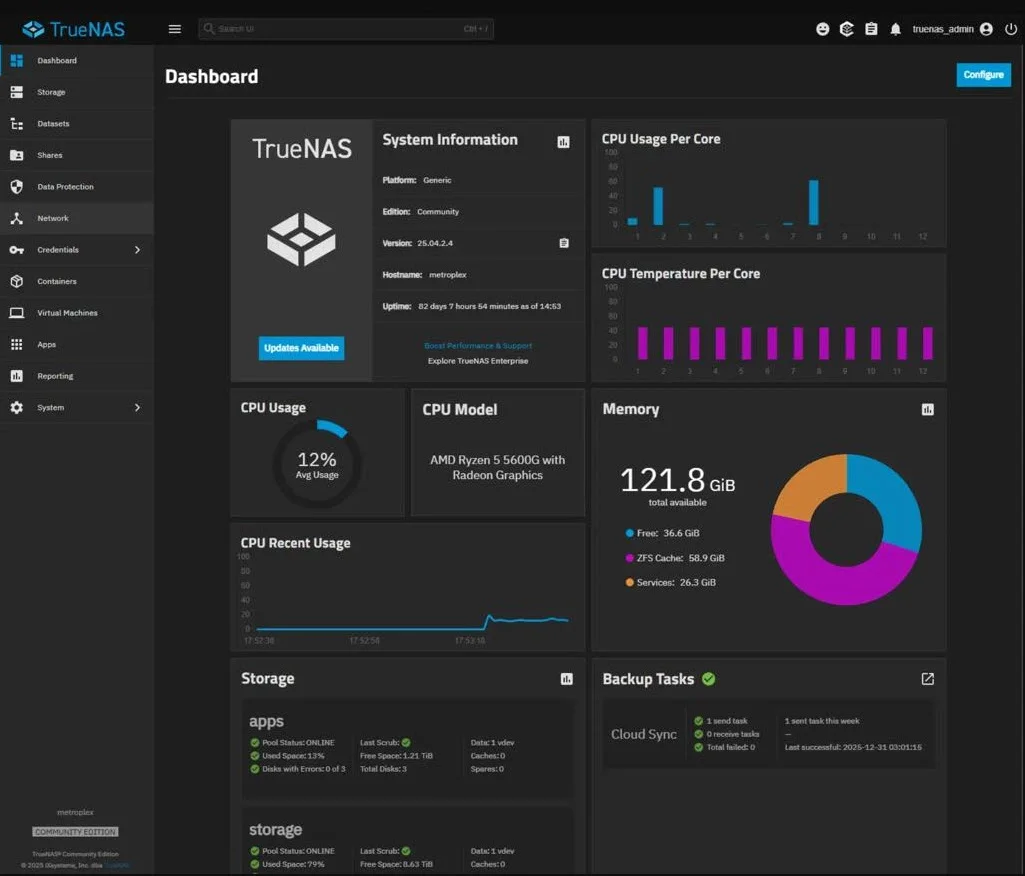
3. TrueNAS Community Edition (CE)
The Community Edition is not a brand new product but rather a rebranded version of TrueNAS SCALE since version 25.04. This change minimizes confusion as there were previously two parallel branches: CORE and SCALE. Currently:
- TrueNAS Community Edition: Free, open-source, suitable for individuals, homelabs, and small businesses.
- TrueNAS Enterprise: A commercial version for production systems, bundled with hardware and support services.
4. TrueNAS Enterprise
TrueNAS Enterprise is the business-focused version. It utilizes the same core code as the Community Edition but includes additional features:
- High Availability (HA).
- Technical support from iXsystems.
- Performance optimization.
- Deep integration with VMware, Proxmox, Veeam, etc.
- Certified hardware.
This is the appropriate choice for businesses requiring continuously operational storage systems with professional support.
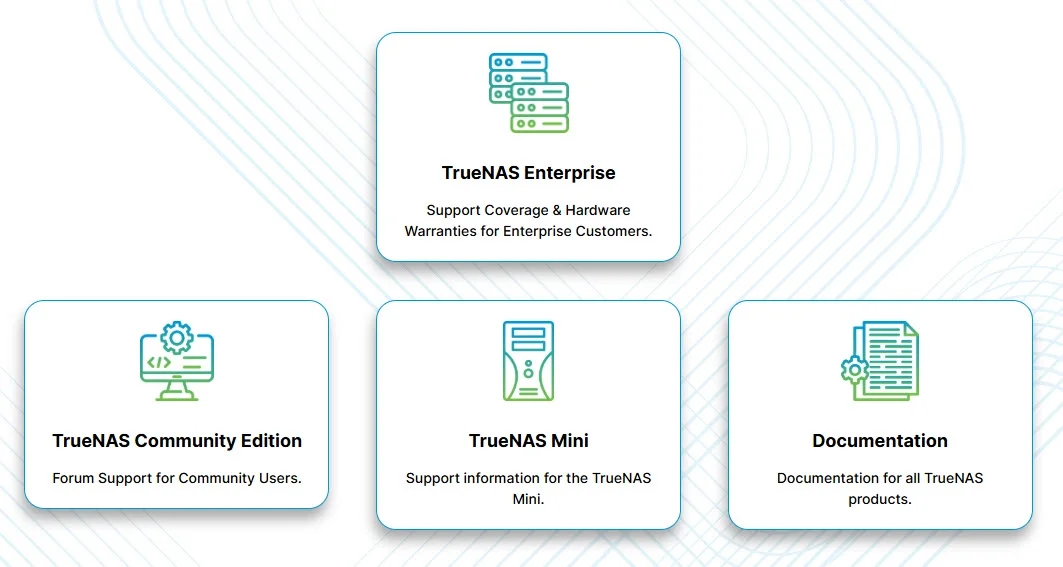
Comparison of TrueNAS Versions
| Version | Platform | Status | Docker/App Support | VM Support | Target Audience |
|---|---|---|---|---|---|
| TrueNAS CORE | FreeBSD | Maintenance | Limited | Yes | Legacy Systems |
| TrueNAS SCALE | Debian Linux | Renamed to CE | Yes | Yes | New Users |
| TrueNAS Community Edition | Debian Linux | Active Development | Yes | Yes | Individuals, Homelab, SMB |
| TrueNAS Enterprise | Debian Linux | Commercial | Yes | Yes | Businesses |
Which Version Should You Choose?
If you’re about to install a new NAS system in 2026, the choice is straightforward:
- For Beginners: Choose TrueNAS Community Edition to benefit from its modern interface, long-term updates, Docker support, virtual machine capabilities, and excellent hardware compatibility.
- For Homelab Enthusiasts: The Community Edition is nearly perfect, allowing you to run applications like Immich, Nextcloud, Jellyfin, Plex, Home Assistant, Pi-hole, Vaultwarden, and many more Docker applications on the same server.
- For Small Businesses: If manufacturer support is not required, the Community Edition sufficiently meets the needs for data sharing, backup, and running internal applications.
- For Large Enterprises: If the storage system is critical to your infrastructure, requiring high availability and professional support, then TrueNAS Enterprise is a better fit.
Is TrueNAS CORE Still Worth Installing?
In most scenarios, the answer is no. TrueNAS CORE has transitioned to a maintenance mode and now only receives security patches. Meanwhile, all new features, performance enhancements, and hardware support are focused on the Community Edition. For new deployments, the Community Edition is the direction recommended by iXsystems.
Read more
- TrueNAS Core vs TrueNAS Scale – Which NAS OS Is Right for You?
- Understanding TrueNAS RAID Levels: Stripe, Mirror, RAIDZ, and dRAID Explained
- How to Install and Configure Multi PHP Version on Ubuntu / Debian
- Top Free NAS OS to Build Your Own NAS Server
- How to Self-Host n8n on Windows Using WSL and Docker
Conclusion
TrueNAS represents one of the strongest open-source NAS solutions available today, suitable for users ranging from individuals to large enterprises. With its OpenZFS foundation, superior data protection abilities, and features like Docker, virtual machines, snapshots, and replication, TrueNAS transcends mere storage solutions—it can evolve into the core of a homelab or a small IT infrastructure.
If you’re setting up a new installation in 2026, the recommended option is TrueNAS Community Edition. This actively developed version inherits all the advantages of TrueNAS SCALE and will continue to serve as the primary platform for the community in the years to come.