What is AI Training?
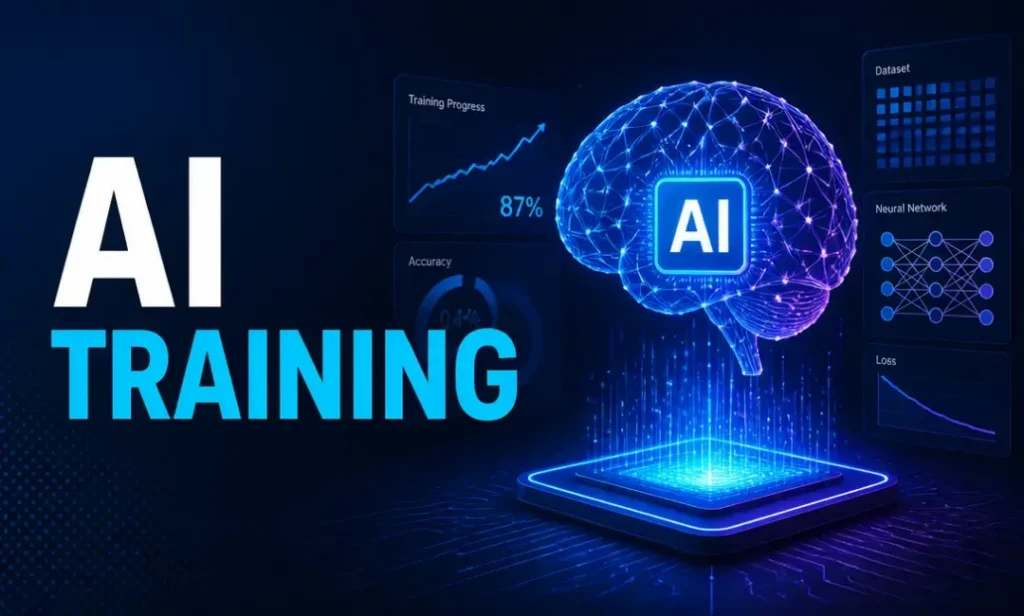
Artificial Intelligence (AI) training is the process of teaching machine learning models to perform specific tasks through exposure to data. It involves feeding large datasets into algorithms that learn to recognize patterns, make decisions, or generate content based on the input they receive. At its core, AI training is about enabling machines to improve their performance over time, ultimately refining their ability to handle real-world scenarios.
Why is AI Training Important?
The importance of training AI cannot be overstated. Here are several key reasons:
- Performance Improvement: Training enables AI systems to enhance their accuracy and effectiveness. The more data they are exposed to, the better they become at making predictions or executing tasks.
- Adaptability: AI models can adapt to new information and changing conditions through continual training. This ability is crucial for applications like autonomous driving, where the system must respond to varied environments.
- Specialization: Different AI models can be trained for specific tasks, leading to specialized systems capable of performing functions like natural language processing, image recognition, or game playing with expert-level proficiency.
- Innovation: Training AI is fundamental in advancing technologies such as robotics, healthcare diagnostics, fraud detection, and personalized recommendations, pushing the boundaries of what machines can achieve.
The Training Process
Training an AI model typically involves several key steps:
- Data Collection: Gathering a diverse and comprehensive dataset is the first step. This data must represent the various scenarios the AI system will encounter.
- Data Preprocessing: Before training, the data often needs to be cleaned and transformed. This may include handling missing values, normalizing data, or encoding categorical variables.
- Model Selection: Choosing the right algorithm or model architecture is crucial. Different tasks may require different types of models, such as neural networks for complex data or simpler regression models for straightforward relationships.
- Training: During training, the model learns from the input data by adjusting its parameters to minimize errors in its predictions. This step often requires substantial computational resources and time.
- Evaluation: After training, the model’s performance is assessed using a separate validation dataset. This helps ensure that the model generalizes well to new, unseen data.
- Tuning: Based on evaluation results, hyperparameters of the model may need adjustments for improved accuracy.
Read more
- OpenAI Officially Introduces GPT-5.6: Sol, Terra, and Luna – Which Model Should You Choose?
- How to Boost Your Raspberry Pi Performance by Booting from USB or External Drive
- Understanding OPNsense: The Open-Source Firewall for All Organizations
- Understanding WireGuard: The Fast and Secure VPN Protocol
- Understanding TrueNAS RAID Levels: Stripe, Mirror, RAIDZ, and dRAID Explained
Conclusion
In summary, AI training is the backbone of building intelligent systems that can learn from experience. Understanding this process is essential for anyone interested in leveraging AI in their work. By investing time and resources into effective training methods, organizations can unlock the full potential of AI technologies, paving the way for innovations that can greatly benefit society.